

Emerald Fennell’s interest in the cruelty people inflict on one another, and whether there is any justice in it, is once again explored in her new adaptation of Wuthering Heights. Unlike her previous two films, however, the story is too thin and ill-fitted to support this exploration.
Before the film even came out, it was set in controversy because of the whitewashed casting of Jacob Elordi as the protagonist Heathcliff, something made even stranger by her willingness to race-bend other roles in the film.
That casting, following a legacy of many white Heathcliffs in screen adaptations of the book, is not the film’s biggest storytelling issue. It’s not even the fact that Fennell seems hardly interested in doing an adaptation at all.
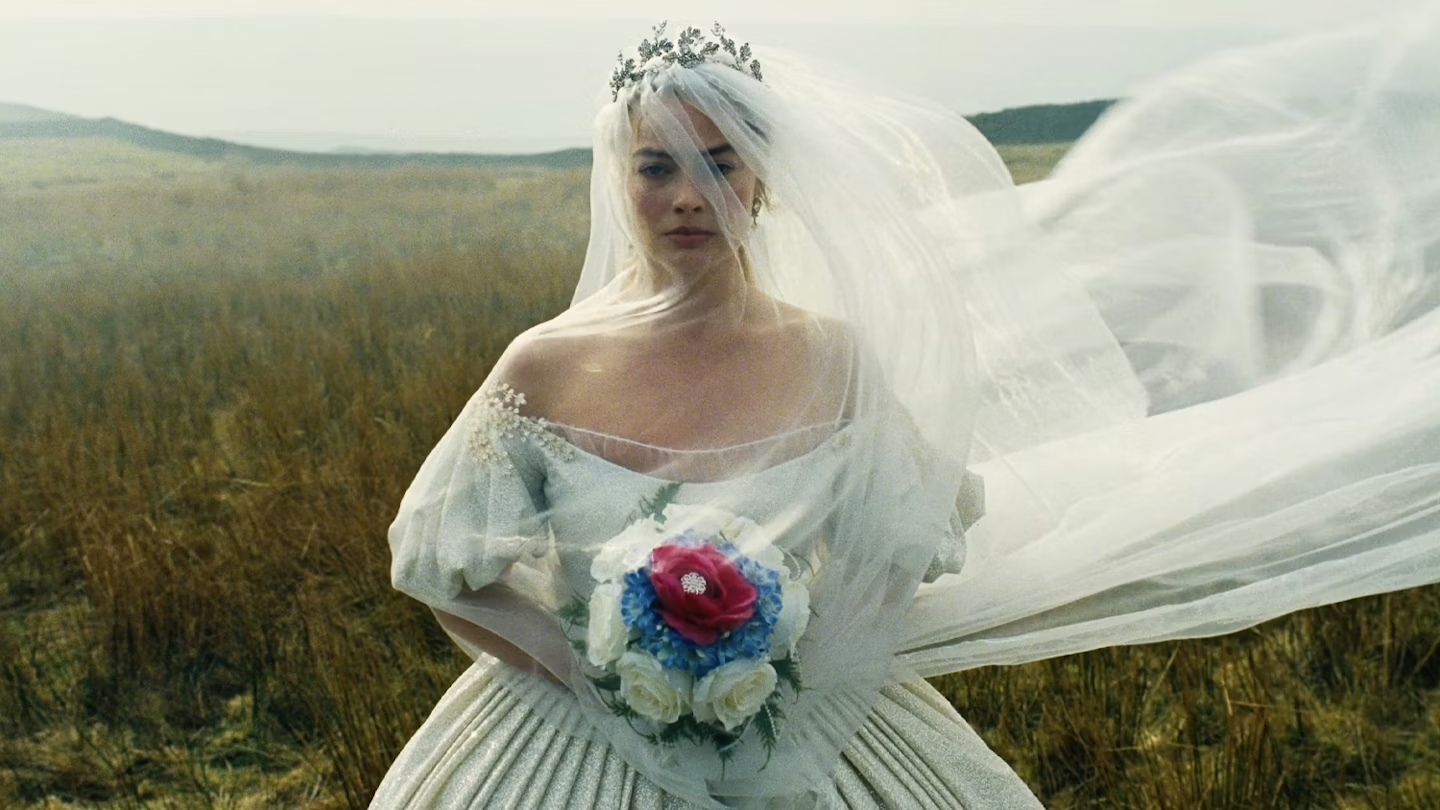
It’s that for all the many changes and liberties, Wuthering Heights is just a visually sumptuous but emotionally hollow film.
This version of Cathy (Margot Robbie) and Heathcliff’s love story, meant to portray abuse and cruelty as something more primal and romantic, does not tug at the heartstrings so much as make the eyes roll. Flawed love stories can be compelling, but nothing is redeeming in spending two hours with these lovers.
The film starts strong, with sweeping views of the moors and two children bonded together by an abusive household, but unravels as the characters age. (Cathy’s age is never explicitly stated in this film version, but Robbie is miscast playing such a petulant, bratty character whose behavior alludes to a much younger woman.)
Neither Cathy nor Heathcliff is particularly compelling, so Cathy’s eventual betrayal of marrying neighbor Edgar Linton (Shazad Latif) feels less earth-shattering than a woman simply making a smart decision based on her financial situation. The subsequent five years of her waiting for Heathcliff’s return and their torrid affair are too flat to even justify the cruelty of the final act.
The chemistry between the two actors is passable during the more erotic scenes, but doesn’t translate to any tender, vulnerable moments. Great period romances can’t be built on lust alone.

Healthcliff seeking his revenge on Cathy for calling off their affair and her becoming increasingly ill is just mean-spirited and plodding. The gothic romance is less of a tragedy and more of a waste of time for everyone involved.
Although there are attempts to cast Nelly (Hong Chau) and Edgar (the only two people of color in the cast) as villains, they seem far too rational to be mad at. Adult Cathy and Heathcliff are victims of no one but themselves.
There are a few elements of the film that transcend the script and are worth recommending. If this review were solely about the haunting score from Anthony Willis and accompanying original songs by Charli XCX, it would fare much better.
The use Charli XCX’s entrancing pop music over the period piece is a boon and supports the more fever-dream aspects of Fennell’s vision. Marie Antoinette (2006) has become a cult classic in part because of its anachronistic soundtrack, and everyone wants their own slice of that particular cake, it seems.
Despite the strange casting choices, there are still some performances that shine through. Alison Oliver is delightful as the naive, turned deviant Isabella Linton.

Whether she’s monologuing about ribbons or barking like a dog, you’ll be transfixed by her, regardless of whether you like the changes made to her character from the book.
Chau’s Nelly, positioned as Cathy’s enemy, actually manages to garner sympathy as you see the way she handles the indignity of her situation as the minority bastard daughter of nobility, contrasted with the immature Cathy. Her propriety leads to a fatal mistake, but you also believe her remorse, unlike that of her tormentors.
Jacqueline Durran’s costumes, while not period-accurate, contrast beautifully with the dark, gloomy setting and give life to the film. Once living in the Linton house, Cathy becomes as doll-like as the one Isabella makes for her, so the costumes feel fitting.
Wuthering Heights may end up achieving its own cult status for its peculiarity and aesthetic, but that’s the most it can hope to achieve in the annals of period films.